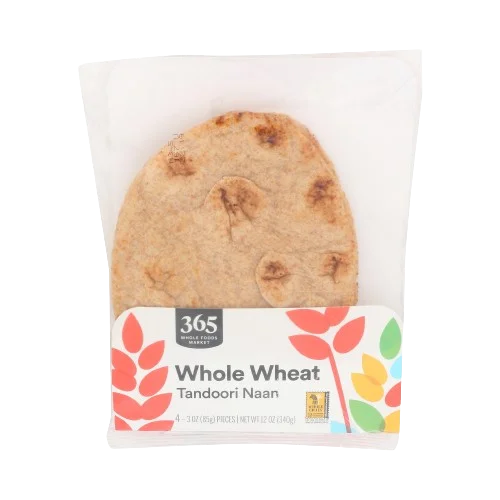
This product receives a 1/5 green leaf rating. The ‘365 by Wholefoods Tandoori Naan, Whole Wheat’ is a commercial take on the traditional Indian bread. However, it falls short of meeting the criteria for cleaner food options due to several ingredients that raise concerns.
The naan is not organic, which is a significant drawback for those seeking foods produced without synthetic pesticides and fertilizers. Additionally, there is no confirmation of non-GMO ingredients, which further detracts from its clean food status. The inclusion of added sugars, such as cane sugar and dextrose, contributes to the product’s low score, as these ingredients are often criticized for their potential health impacts when consumed in excess.
Furthermore, the product contains enriched wheat flour, which, while fortified with vitamins, is often stripped of natural nutrients during processing and is viewed unfavorably by those advocating for whole, unrefined grains. The presence of highly refined soybean oil is another red flag. This type of oil is often processed using chemicals and may contain trans fats, which are linked to negative health effects.
The naan also lists additives like sodium acid pyrophosphate and monocalcium phosphate, components of the baking powder used in the dough, which are considered unnecessary by those prioritizing minimally processed foods. Additionally, the use of dough conditioners like ascorbic acid and alpha-amylase, although common in commercial baking, may be unwanted by consumers looking for simpler, more natural ingredient lists.
Given these considerations, the product’s low green leaf rating reflects its position among the less desirable options for those seeking cleaner, more health-conscious food products. It does not align with the values of consumers who prioritize organic, non-GMO, and minimally processed ingredients. Therefore, those who are looking for cleaner, more wholesome alternatives in the market may choose to avoid this particular naan in favor of options with higher green leaf ratings that better meet their criteria for health and quality.